Perinatal
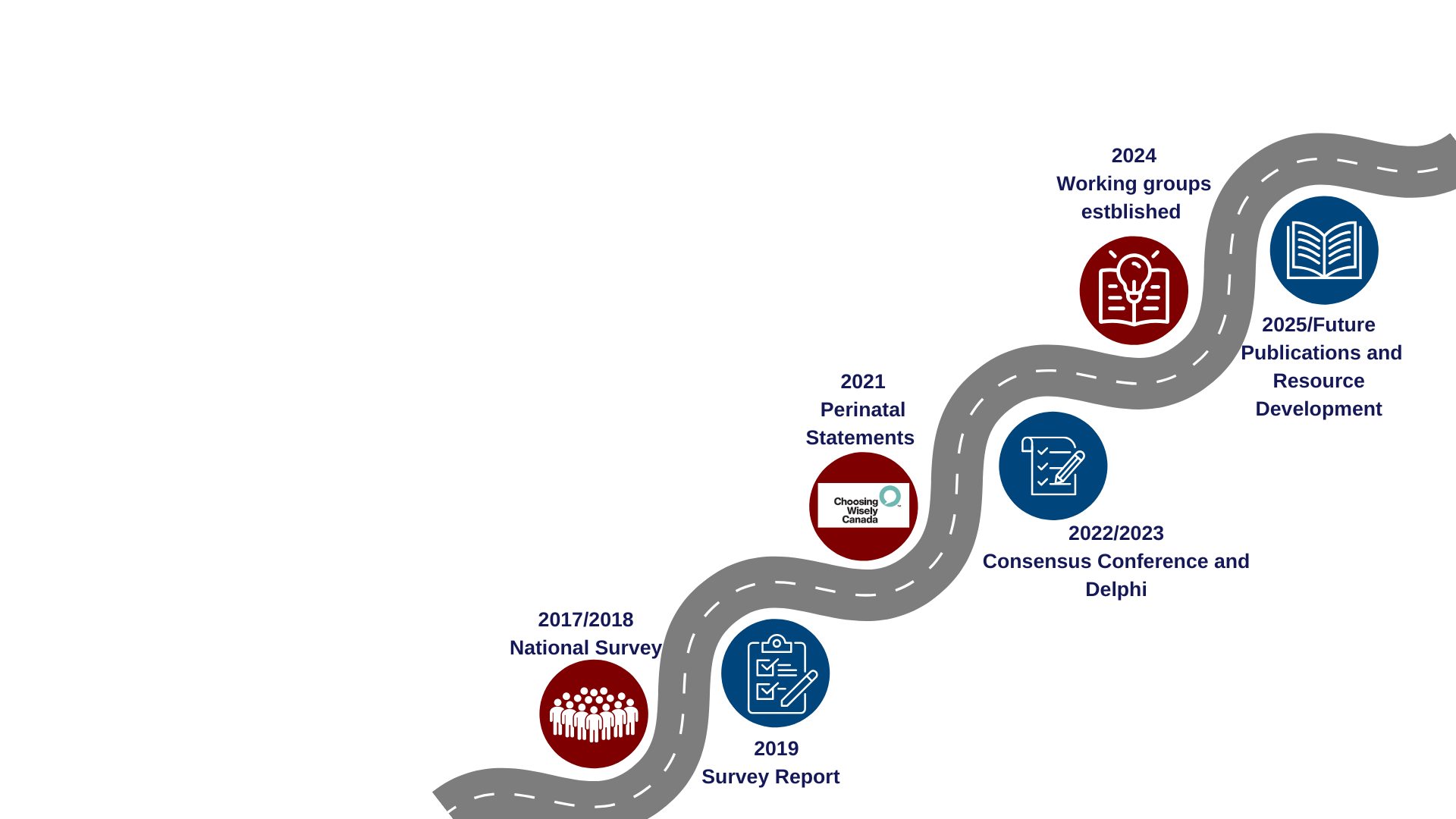
The Canadian Obstetrical and Pediatric Transfusion Network (COPTN) identified wide variation in perinatal testing practices across Canada and developed consensus guidance to support optimal immunohematology testing for prevention and diagnosis of HDFN. This page provides Ontario‑specific resources and tools.
Canadian Consensus Guidelines for Perinatal Testing
Gwen Clarke, September 2023
Viewing Fetal RHD Screening and Alloimmunized Fetal Blood Group Genotyping Results
This resource was developed to aid hospital laboratories with access and viewing of both Fetal Blood Group Genotyping tests in the provincial clinical viewers. Version 1.0, Date: April 2026
Guidance for HDFN prevention and monitoring (High Risk Statements)
H1
Communication between the obstetric, neonatal, and transfusion care providers regarding alloimmunized pregnancies is recommended.
H2
Once a clinically significant antibody has been identified, paternal antigen testing is suggested to assess the risk to the fetus, if paternity is assured.
H3
For anti-K antibodies, early consultation with Maternal Fetal Medicine is recommended.
H4
For patients with clinically significant antibodies to RhD, C/c, E, or K, non-invasive prenatal testing (cffDNA testing of maternal plasma) is recommended to determine if the fetus is at risk.
H5
Once a clinically significant antibody has been identified, antibody titration is recommended every four weeks until 28 weeks and every two weeks thereafter. If a critical titre is reached, referral to Maternal Fetal Medicine is recommended.
H6
Once a critical titre is reached, further monitoring of antibody titres is not routinely recommended; evaluation by Maternal Fetal Medicine with monitoring by MCA Doppler ultrasound is recommended.
H7
Maternal fetal medicine consultation is recommended for alloimmunized pregnancies with clinically significant antibodies when:
- a critical titre is identified, and the corresponding fetal antigen is unknown or predicted positive based on cffDNA assessment.
- an anti-K antibody is identified.
- a previous fetus or neonate has been affected by HDFN requiring intrauterine or post-natal transfusion and the corresponding fetal antigen is unknown or predicted positive based on cffDNA assessment.
H8
Monitoring of alloimmunized pregnancies with antibody titration is not routinely recommended in the following situations:
- a critical titre is identified,
- cffDNA assessment predicts that the fetus is negative for the corresponding antigen,
- a previous fetus or neonate was affected by HDFN and required intrauterine or post-natal transfusion.
H9
Maternal (or cord) antibody titrations are not recommended immediately pre-delivery, or postpartum.
H10
RhIg is recommended for RhD negative pregnancies following any fetal intervention, invasive prenatal testing, or maternal abdominal trauma starting at 8 weeks 0 days gestation.
H11
RhIg is recommended for RhD negative pregnancies starting at 8 weeks 0 days gestation, following an ectopic pregnancy.
H12
RhIg is recommended for RhD negative pregnancies starting at 8 weeks 0 days gestation, following molar pregnancy.
H13
RhIg is recommended for RhD negative pregnancies following amniocentesis.
H14
RhIg is recommended for RhD negative pregnancies following chorionic villus sampling.
H15
When RhIg may have been previously administered and there is uncertainty about whether the antibody detected is passive (due to RhIg) or immune:
- RhIg is recommended for routine antenatal dosing and for sensitizing events.
- ongoing titration of anti-D at usual intervals is recommended.
- repeat antibody assessment is suggested at six (6) months postpartum.
High Risk Statements
RhD, RhIg & FMH Clinical Guidance (Low Risk Statements)
L1
For routine care, prenatal testing for ABO, RhD, and antibody screen is recommended after 8 weeks gestation, preferably between 11 and 14 weeks.
L2
A routine ABO, RhD and antibody screen may not be necessary at 28 weeks gestation for either RhD positive or RhD negative pregnancies.
L3
Antibody screening is suggested for all pregnancies (RhD negative and RhD positive) following a sensitizing event or after maternal RBC transfusion.
L4
Maternal ABO, RhD, and antibody screen at the time of delivery is only recommended when:
- there is no prior test during the current pregnancy; and/or
- there is a clinically significant antibody; and/or
- the risk of maternal transfusion is increased; and/or
- the risk of neonatal transfusion is increased.
L5
RHD genotyping is recommended in any pregnant person with weak or variably reactive RhD typing.
L6
It is recommended that pregnancies with weak or indeterminant RhD and without available RHD genotype results be considered RhD negative until genotyping results are available.
L7
For any pregnancy less than 12 weeks gestational age (12 weeks 0 days) experiencing an abortion (threatened, spontaneous or therapeutic), an ABO, RhD, and antibody screen are not recommended and RhIg is not required.
L8
Informed consent (verbal or written) must be obtained and documented prior to the administration of RhIg.
L9
For RhD negative pregnancies, determination of fetal RhD status by non-invasive prenatal testing (cffDNA testing of maternal plasma) is suggested to avoid unnecessary RhIg administration.
L10
Routine antenatal RhIg at a dose of 300 μg (1500 IU), is recommended for all RhD negative pregnant individuals at approximately 28 weeks gestation.
L11
For sensitizing events in RhD negative pregnancies RhIg dosing varies depending on gestational age of the pregnancy:
- less than 8 weeks 0 days: no RhIg required
- > 8 – 11 weeks: 120 μg (600 IU) for ectopic or molar pregnancies, trauma or invasive prenatal testing (RhIg not required for abortions)
- > 12–19 weeks: 300 μg (1500 IU) for all sensitizing events
- > 20 weeks: 300 μg (1500 IU) for all sensitizing events with FMH quantification to determine need for additional doses.
L12
If immune anti-D is detected, RhIg is not recommended.
L13
RhIg is recommended for routine prophylaxis and for sensitizing events in RhD negative pregnancies even when antibodies other than anti-D are present.
L14
In the setting of ongoing or recurrent antepartum bleeding starting at 20 weeks (≥20 weeks 0 days) gestation in an RhD negative pregnancy, both RhIg and FMH testing are recommended.
L15
Following delivery of an RhD positive neonate in an RhD negative pregnancy, RhIg is required within 72 hours of delivery.
L16
Postnatal RhIg dosing (300 μg (1500 IU) or 120 μg (600 IU)) may vary depending on access to FMH test results.
L17
Quantitative FMH testing prior to 20 weeks gestation is not routinely recommended for RhIg dose guidance.
L18
Quantitative FMH testing is required starting at 20 weeks (≥20 weeks 0 days) gestation for pregnancies with a sensitizing event that may lead to FMH.
L19
For sensitizing events starting at 20 weeks gestation (>20 weeks 0 days), RhIg doses should be based on quantitative FMH assessment with use of a validated calculator.
L20
FMH testing is required postpartum for RhD negative pregnancies with an RhD positive neonate.
L21
Flow cytometry is recommended for confirmation of diagnosis and quantitation of FMH, where feasible.
Low Risk Statements
Neonatal Cord Blood Testing (Neonatal Cord Statements)
N1
Samples for pre-transfusion testing in the neonate must be collected and labeled in compliance with requirements of the Canadian standards for blood and blood components (CAN/CSA Z902).
N2
Cord blood sample collection and testing is recommended for all neonates when:
- the pregnant person is RhD negative, RhD indeterminate or RhD unknown; or
- the pregnant person has a clinically significant antibody;
- there is a history of HDFN-mediated hyperbilirubinemia requiring transfusion (intrauterine or postnatal) or IVIG therapy for a prior fetus or neonate;
- there are known risk factors for nonimmune neonatal jaundice or anemia (such as G6PD deficiency).
N3
Neonatal RhD typing on a cord or peripheral blood sample is required for all RhD negative or indeterminate pregnancies.
N4
A weak D test is required on a cord or neonatal peripheral sample when the mother and neonate are RhD negative or indeterminate.
N5
For alloimmunized pregnancies, cord phenotyping for the implicated antigen and DAT are recommended.
N6
For neonates with hyperbilirubinemia, investigations and management according to the Guidelines of the Canadian Paediatric Society are recommended.
N7
A neonatal DAT is not recommended as a single test to screen for an alloimmune cause of hyperbilirubinemia.
N8
If neonatal transfusion is required, a neonatal peripheral blood or maternal blood sample should be used for antibody screen.